

Description
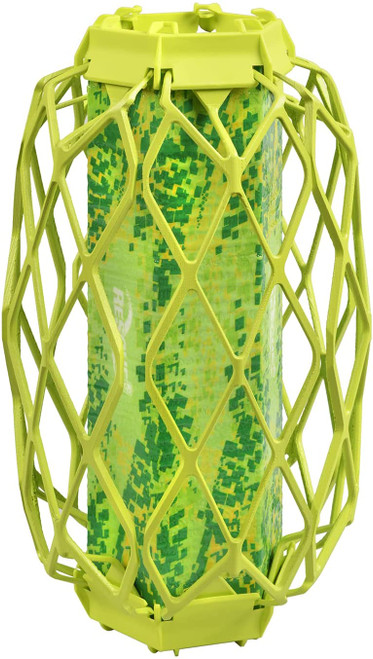
RESCUE! WASP TrapStik® employs our exclusive VisiLure® colors and patterns proven to attract wasps, mud daubers and carpenter bees outdoors. Our TrapStik® works like nothing else on these pests. Set up the TrapStik following the instructions and hang where you see insect activity and/or damage to wood structures. For best results, hang from man-made structures such as sheds, overhangs and fences, NOT in trees, bushes or shrubs. Insects are drawn to the colors and pattern and land on the surface where they get stuck in the glue. To protect wildlife from the sticky surface we added bird guards.
- Capture the Queen, Empty the Nest
- Kills Wasps
- Kills Mud Daubers
- Kills Carpenter Bees
- No Poisons or Killing Agents
- UV Treated and Water Resistant
Directions:
Instructions: Directions For Use: 1. Inside box are wrapped TrapStik and 6 bird guard pieces which are designed to help keep birds off sticky surface. 2. Place wrapped TrapStik upright on stable surface, tear and perforated strip to remove wrap and expose adhesive. 3. Install bird guards by laying TrapStik on its side. Place the first bird guard over TrapStik, making sure the center crossbars are facing the glue and the rounded edges follow the curved grooves in the caps. Firmly press bird guards onto caps, starting with the middle bar that snaps into the deepest groove and then along the rounded edges that fit into the curved grooves of each cap. 4. Hanging loop is built into the cap. Insert index finger through hole to lift and bend to a 90-degree angle. Placement: Hand TrapStik from the eaves of your home or wherever you see evidence of wasp, mud dauber or carpenter bee activity. For best results, hand from man-made structures where the insects nest or bore holes, such as an eave, awing, pergola, garage or shed. Avoid hanging where birds or other wildlife activity happens, and where children or pets may come in contact with the adhesive. TrapStik can be placed next to an insect nest to deplete the population.